Termites in Trees: Should You Be Worried?
Found termites in a tree? Here's what termite activity really means, the warning signs of internal decay, when removal is necessary, and how a professional inspection protects your property.
When most people hear the word termites, they immediately think about damage to houses. But termites also play an important role in the environment, especially around trees. The key is understanding when termites are helping nature and when they're creating a hazard.
If you've noticed termites in a tree on your property, don't panic — but don't ignore it either.
Do Termites Kill Trees?
In many cases, termites do not kill healthy living trees.
Australian termites generally feed on dead or decaying wood, meaning they often invade a tree after it has already been weakened by:
- Storm damage
- Disease or fungal decay
- Fire damage
- Old age
- Physical injuries from machinery or poor pruning
The termites are usually taking advantage of an existing problem rather than causing it. However, some termite species can attack stressed or weakened living trees, accelerating their decline.
Why Are Termites Found in Trees?
Termites are nature's recyclers. They break down dead timber and return nutrients to the soil.
Finding termites in a tree could mean:
- There is internal decay
- The trunk has hollow sections
- Roots have begun to rot
- Old pruning wounds have become infected
- The tree has suffered structural damage
The presence of termites is often a symptom, not the original cause.
Signs a Tree May Have Termites
Keep an eye out for:
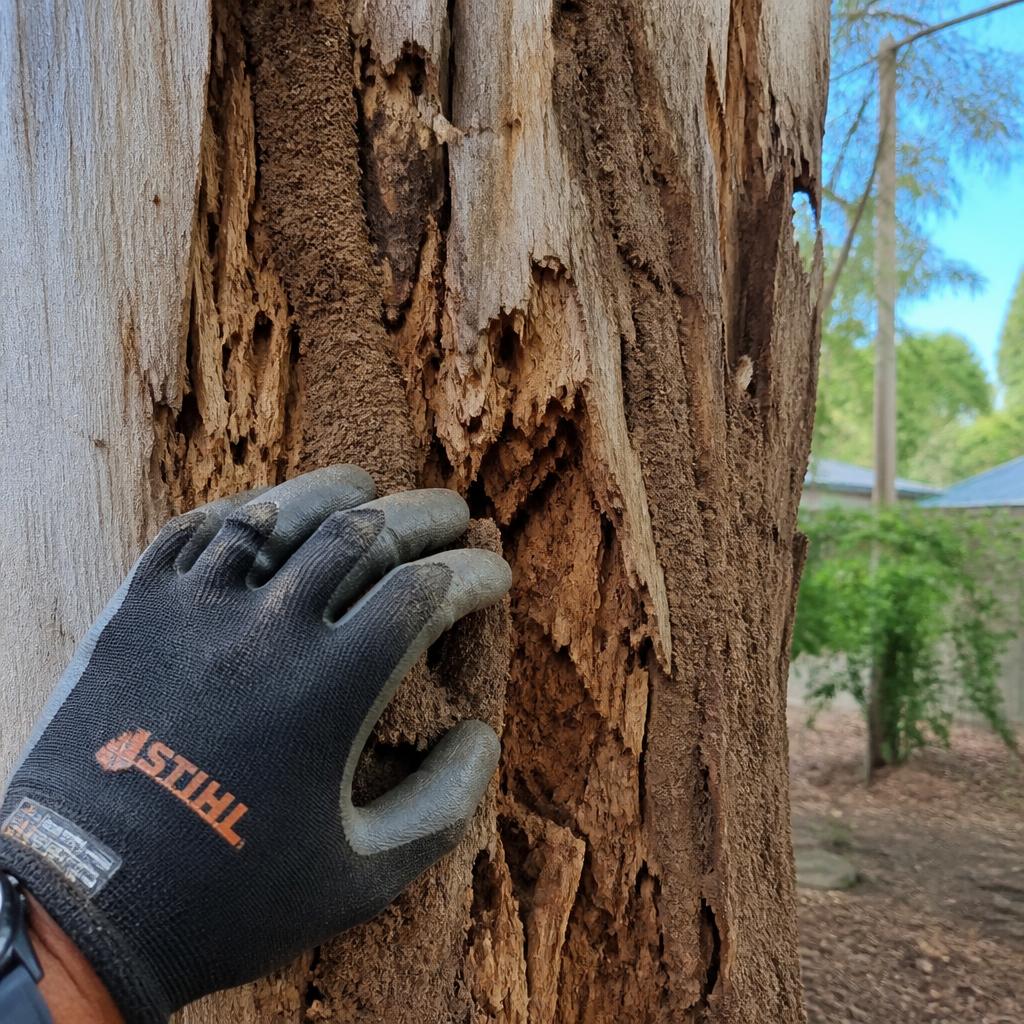
- Mud tubes climbing the trunk
- Hollow sounds when tapping the trunk
- Timber breaking away easily
- Small piles of termite droppings (depending on species)
- Sections of bark falling away
- Dead branches in the upper canopy
- Visible cavities or hollows
Not every hollow tree contains termites, but termite activity is a sign the tree should be professionally assessed.
Are Termites Dangerous in Trees?
The biggest concern isn't usually the termites themselves — it's what they've found. If termites are feeding inside a tree, there may already be internal decay, hollow trunks, weak branch unions and reduced structural strength.
This can increase the likelihood of:
- Falling branches
- Trunk failure
- Whole-tree collapse during storms or high winds
A tree can still appear healthy on the outside while being significantly compromised internally.
Can Tree Termites Spread to Your Home?
Sometimes — but not always. If termites are active in a tree close to your house, they may eventually search for additional food sources, including:
- Timber fences
- Retaining walls
- Garden sleepers
- Firewood
- Structural timber in your home
Having termites in a tree doesn't automatically mean your home is at risk, but it is worth investigating — especially if the tree is within several metres of the building.
Professional Termite & Tree Inspections
If you suspect termites are present in one of your trees, it's important to have the tree professionally assessed. While termites don't always mean a tree is unsafe, they can indicate internal decay or structural weaknesses that aren't visible from the outside.
At DTS Tree & Stump Removal, we provide on-site tree inspections to assess the condition of trees affected by termite activity and determine whether they can be retained, pruned, or should be removed.
Our inspection fee typically ranges from $250 to $400, depending on:
- The size of the tree
- Accessibility
- The complexity of the inspection
- The number of trees requiring assessment
If a written arborist report or additional testing is required, we'll discuss the options and associated costs with you before any further work is undertaken.
Should You Remove a Tree with Termites?
Not necessarily. Removal depends on the condition of the tree — not simply the presence of termites.
An experienced arborist will assess:
- Tree species
- Structural integrity
- Amount of decay
- Percentage of sound wood remaining
- Tree location
- Targets beneath the tree (homes, cars, play areas, footpaths)
Some trees remain safe for many years, while others require urgent removal.
Can the Tree Be Saved?
Sometimes. If termite activity is limited and the tree remains structurally sound, management may include:
- Deadwood removal
- Weight reduction pruning
- Ongoing inspections
- Soil improvement
- Mulching and watering
- Pest management where appropriate
The right approach depends on the overall health of the tree.
The Difference Between Arborists and Pest Controllers
Many people assume termite issues belong only to pest controllers. In reality, a pest controller deals with eliminating termites and protecting structures from infestation, while an arborist assesses the health and structural integrity of the tree to determine whether it remains safe to retain.
If termites are found in a tree near your home, you may need both professionals to ensure your property is protected and the tree is safe.
How DTS Tree & Stump Removal Can Help
At DTS Tree & Stump Removal, we inspect trees showing signs of termite activity, internal decay, storm damage, and structural weakness.
Our experienced team can:
- Assess whether the tree poses a safety risk
- Identify signs of internal decay and structural defects
- Recommend whether the tree can be retained, pruned, or removed
- Safely remove hazardous trees
- Grind stumps to help prevent future pest issues
- Provide honest, practical advice based on the tree's condition
We service homes and businesses throughout Melbourne and understand the local tree species and conditions that commonly lead to decay and termite activity.
Need a Professional Tree Assessment?
If you've noticed termite activity, hollow sections, dead branches, or signs of decay in one of your trees, don't wait until it becomes a safety hazard.
We provide professional tree inspections, expert advice, and safe tree removal throughout Melbourne. Contact us today to book a tree inspection — inspection fees typically range from $250 to $400 depending on the size and complexity of the assessment.
Frequently asked questions
- Do termites always mean a tree is dying?
- No. Healthy trees can occasionally contain termites, but termite activity often indicates existing decay or structural issues that should be professionally assessed.
- Will termite treatment save the tree?
- Not necessarily. Eliminating the termites does not repair internal decay or restore structural strength if the tree has already been compromised.
- Can termites hollow out a tree?
- Yes. Over time, termites can enlarge existing cavities by consuming dead wood, reducing the tree's structural integrity.
- Should I worry about a hollow tree?
- Not every hollow tree is dangerous, but hollows should always be assessed by a qualified arborist, particularly if the tree is located near people, buildings, driveways, or other valuable assets.
- How often should trees be inspected?
- Trees located near homes, schools, driveways, or public areas should generally be inspected every one to three years, and sooner following severe storms or if signs of decay become apparent.
Need a tree assessed or removed?
Free, no-obligation quotes from Melbourne's local arborists.