Do You Need a Permit to Remove a Tree in Macedon Ranges Shire?
Gisborne, Riddells Creek, Romsey, Macedon and Woodend all sit under Macedon Ranges Shire's vegetation controls. Here's when you need a planning permit, when you're exempt, and what the council actually asks for.
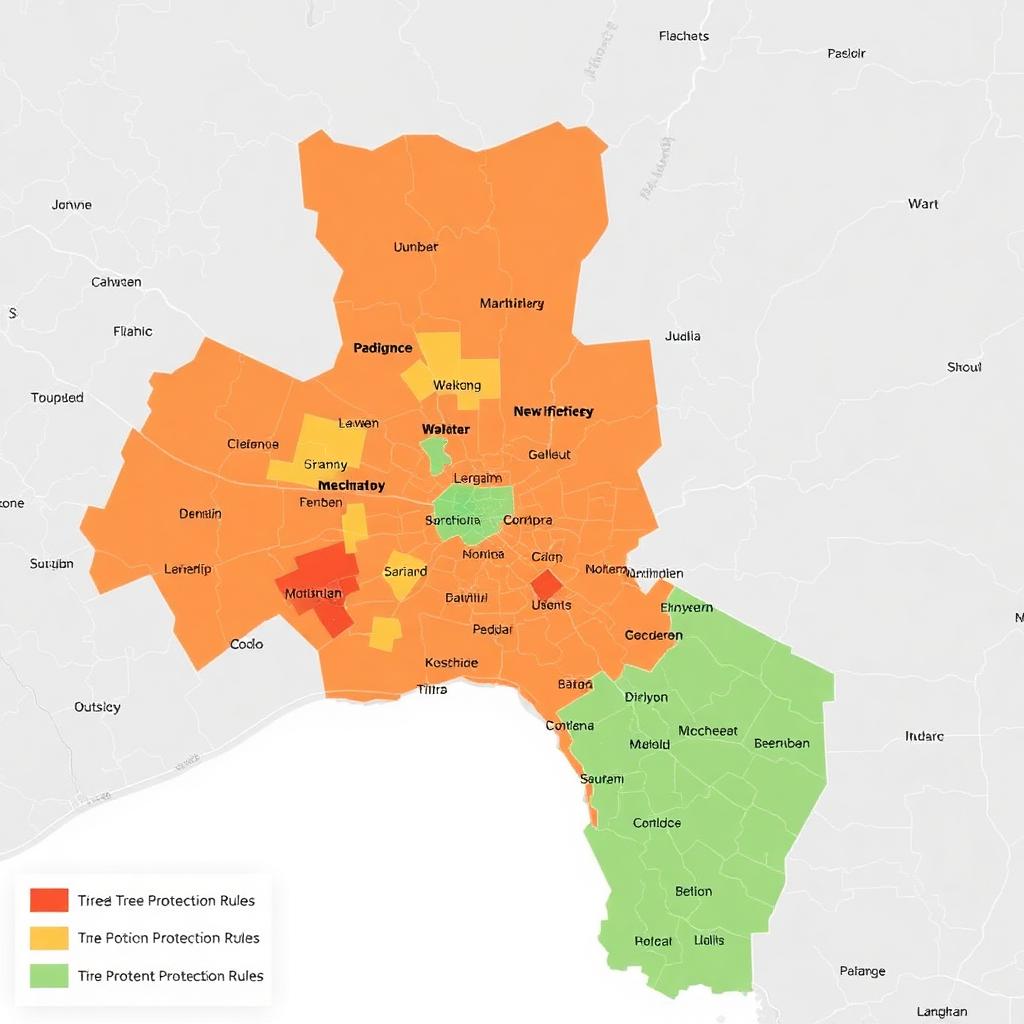
Macedon Ranges Shire has some of the strictest vegetation controls in Victoria, and for good reason — the shire's tree cover is the reason most people move there. If you own land in Gisborne, New Gisborne, Riddells Creek, Romsey, Macedon, Mount Macedon, Woodend or Lancefield, there is a real chance the tree you want removed is protected.
That doesn't mean removal is impossible. It means the order of operations matters: check the controls first, document the tree's condition second, apply third, cut last. Doing it the other way around is how people end up with enforcement notices.
The three layers of control
There is no single Macedon Ranges tree law. Three separate layers can each independently require a permit, and any one of them is enough to stop a removal:
- State-level native vegetation controls (Clause 52.17 of the planning scheme) — these apply to native vegetation on most lots larger than 0.4 hectares, which covers the great majority of rural-living land around Gisborne, Riddells Creek and Romsey.
- Planning overlays on your specific title — most commonly the Environmental Significance Overlay (ESO), the Significant Landscape Overlay (SLO), the Vegetation Protection Overlay (VPO) and the Bushfire Management Overlay (BMO).
- The shire's local law, which protects street trees and trees on council land absolutely — you cannot prune or remove a nature-strip tree yourself, even if it is dropping limbs on your driveway.
The overlays are title-specific. Two neighbours on the same road can have completely different obligations, so a neighbour's recent removal tells you nothing about your own position.
When you're likely to need a permit
- Removing, destroying or lopping native vegetation on a lot over 0.4 hectares — this is the single most common trigger in the shire.
- Any tree removal on a title carrying an ESO, SLO or VPO, native or exotic, where the overlay schedule names a size trigger your tree exceeds.
- Removal that forms part of a wider development, subdivision or new dwelling — vegetation is assessed as part of the planning application.
- Anything on the nature strip, road reserve or council reserve, regardless of who planted it.
When you're likely to be exempt
- The tree is genuinely dead — but 'dead' means dead, not declining, and council can ask you to prove it. Photograph it before you touch it.
- The tree presents an immediate risk to life or property. This exemption is narrow and assessed after the fact, so document the defect, get an arborist assessment in writing, and remove only what is needed to make the site safe.
- Bushfire exemptions: broadly, vegetation within 10 metres of an existing dwelling and understorey within 50 metres may be removed for defendable space. The measurement is from the building, and it applies to an existing dwelling — not a planned one.
- The tree is a declared noxious weed species, or planted for commercial purposes such as an orchard or plantation.
Exemptions are self-assessed, which means the risk sits with the landowner. Penalties for unlawful removal in Victoria run into tens of thousands of dollars, and councils do act on them. If there is any doubt, an inspection costs a fraction of a fine.
What the council asks for
Where a permit is required, a Macedon Ranges application is usually assessed far faster when it is supported by an arborist report covering:
- Species, height, trunk diameter at breast height and canopy spread
- Health and structural condition, with photographs of the specific defects
- Useful life expectancy and risk rating
- Whether pruning, cabling or crown reduction is a reasonable alternative to removal
- Offset or replacement planting proposed
That last point matters locally. Macedon Ranges frequently approves removal on the condition that replacement planting goes in — often indigenous species suited to the site. Proposing sensible replacement planting up front removes the most common reason applications stall.
How this plays out suburb by suburb
Gisborne and New Gisborne: established township blocks carry mature exotics — elms, oaks, cypress and pines planted decades ago — alongside remnant natives. Township lots under 0.4 hectares often escape the native vegetation trigger but can still be caught by an overlay.
Riddells Creek: heavily vegetated rural-living lots with steep, treed driveways and strong bushfire exposure. Most removals here need the overlay check, and most useful work is fuel reduction and deadwooding rather than felling.
Romsey and Lancefield: open farming country where the work is usually windbreak removal, paddock red gums and old pine shelter belts. Paddock trees are frequently remnant native vegetation, which is exactly what Clause 52.17 protects.
Macedon and Mount Macedon: the strictest end of the shire. Assume a permit is required and start with an inspection.
Local tree removal in the Macedon Ranges
We work across the shire and handle the permit paperwork with you:
A practical order of operations
- Get your property's planning report and check which overlays apply to your title.
- Photograph the tree now, from several angles, including any defects.
- Book an arborist inspection to confirm whether the tree is exempt, prunable or genuinely needs to come out.
- If a permit is needed, lodge with a written report and a replacement planting proposal.
- Only book the removal once the position is confirmed in writing.
We do this every week across the shire. Get a free on-site quote from DTS Tree & Stump Removal — we'll tell you honestly whether your tree needs a permit before we quote the work.
Frequently asked questions
- Do I need a permit to remove a dead tree in Macedon Ranges Shire?
- A genuinely dead tree is generally exempt, but the burden of proof sits with you. Photograph the tree before removal and keep a written arborist assessment confirming it was dead — a declining or partially dead tree is not exempt.
- Can I remove trees for bushfire safety in Gisborne or Riddells Creek?
- Victoria's bushfire exemptions generally allow removal of vegetation within 10 metres of an existing dwelling and understorey within 50 metres, including inside the Bushfire Management Overlay. Beyond those distances a planning permit is usually required.
- What happens if I remove a protected tree without a permit?
- Unlawful native vegetation removal in Victoria can attract penalties in the tens of thousands of dollars, plus orders to replant and offset. Councils in the Macedon Ranges do enforce this, so check before cutting.
- Does the 0.4 hectare rule apply to my block?
- Lots over 0.4 hectares are generally caught by the state native vegetation controls, which covers most rural-living land around Gisborne, Riddells Creek and Romsey. Smaller township lots may be exempt from that clause but can still be covered by an overlay.
- Do you prepare arborist reports for Macedon Ranges permit applications?
- Yes. We prepare reports covering species, condition, useful life expectancy, risk rating, alternatives to removal and replacement planting — the detail the shire asks for when assessing an application.
Need a tree assessed or removed?
Free, no-obligation quotes from Melbourne's local arborists.