Tree Removal & Stump Grinding in Point Cook
DTS Tree & Stump Removal is a trusted local arborist working across Point Cook and surrounding Melbourne suburbs. From single backyard trees to large, dangerous removals — we've got Point Cook covered.
Point Cook Tree Removal, Estate Pruning & Wyndham Permits
Point Cook sits within Wyndham City Council — a fast-growing western growth corridor where estate plantings have outgrown small blocks. That shapes the work we do here: estate plantings at 15–25 years old — flowering gums, bottlebrush, ornamental pears, pin oaks and fast-grown cypress screens.
Before we quote a removal in Point Cook we check the planning controls on your address, because the Wyndham Planning Scheme decides whether council approval is needed. New-estate blocks with very tight side access, often under 900mm, and heavily paved yards. We use narrow-access grinders and lay boards to protect pavers and turf.
Every job in Point Cook is fully insured ($20M public liability), planned with your property in mind, and quoted honestly with no hidden extras. If a tree is storm-damaged, dead or leaning over a house, fence or power line — call us first.
Services available in Point Cook
Tree removal permits in Point Cook — Wyndham City Council
Wyndham's growth-corridor estates are largely free of tree controls on standard lots, so most removals don't need a permit. Native vegetation near the Werribee River, Skeleton Creek and remaining grassland reserves is a different story and generally needs approval.
Planning controls for Point Cook sit under the Wyndham Planning Scheme. You can confirm exactly what applies to your address with a free Planning Property Report from the Victorian Government, or we can check it for you when we quote.
Planning overlays you may strike in Point Cook
Applies along creek corridors, remnant bushland and grassland reserves. Native vegetation removal generally needs approval.
Mostly affects built form, but estate and infill areas can carry landscaping and canopy-retention conditions.
Floodway and creek-flat land. Vegetation along the waterway is usually protected and may also need Melbourne Water sign-off.
Overlay coverage varies street by street and is indicative only — always confirm against the current planning scheme for your property before removal.
Our tree removal process in Point Cook
- 1. Free on-site assessment
We inspect the tree, the target zone and the access on your Point Cook property, and give you a fixed written price.
- 2. Planning and overlay check
We check the Wyndham Planning Scheme controls for your address and tell you straight away if Wyndham City Council approval is likely to be needed.
- 3. Permit application (if required)
If a permit is needed we help prepare the application, including an arborist report and photos supporting the removal.
- 4. Site setup and safety
Drop zones, ground protection, traffic management if needed, and notification to neighbours where we're working over a shared boundary.
- 5. Removal or dismantle
New-estate blocks with very tight side access, often under 900mm, and heavily paved yards. We use narrow-access grinders and lay boards to protect pavers and turf.
- 6. Stump grinding and clean-up
Stumps ground 200–300mm below grade (deeper for slabs or replanting), all timber chipped and removed, and the site raked clean.
Arborist reports for Wyndham City Council
If Wyndham City Council requires a planning permit to remove your tree, they'll almost always want a report from a qualified arborist. We can prepare that report for you — covering species identification, health and structural condition, useful life expectancy, the risk the tree presents, and whether pruning is a reasonable alternative to removal.
We also prepare tree protection and pre-construction reports for Point Cook developments, and hazard assessments for insurance claims after storm damage.
Common trees we work on in Point Cook
Estate plantings at 15–25 years old — flowering gums, bottlebrush, ornamental pears, pin oaks and fast-grown cypress screens.
Wyndham Planning Scheme and coastal grassland overlays
Point Cook's estate blocks built out from the early 2000s onward generally don't need a planning permit for standard garden tree removal under the Wyndham Planning Scheme — most plantings here are ornamental and post-date subdivision. The exception is vegetation close to the Point Cook Coastal Park, the Skeleton Creek corridor and the remaining native grassland reserves scattered through the suburb, which typically sit under an Environmental Significance Overlay and need council approval before any native tree or understorey is removed.
Point Cook Homestead's surrounds and the wetlands reserves also carry conservation significance that residents sometimes aren't aware extends to nearby private lots, so we always confirm overlay status against the actual title rather than the general suburb reputation.
Bay winds, reactive clay and estate plantings
Point Cook sits exposed to Port Phillip Bay's onshore winds, and estate street trees and screening plantings — flowering gums, bottlebrush, ornamental pears and fast cypress hedges — take a battering during the stronger westerly and southerly changes through winter and spring. That shows up as broken leaders and lopsided canopies more than outright tree failure, since most plantings here are still relatively young.
The basalt-derived clay under much of Point Cook is reactive, and combined with narrow side access on most estate blocks, root proximity to slabs and retaining walls is a common reason residents call us rather than pure aesthetics — particularly on blocks backing onto the wetlands and drainage reserves where soil stays wetter for longer.
Most common Point Cook jobs
Removal and reduction of wind-damaged estate screening trees and hedges along boundary fences.
Stump grinding after removal to make way for pools, decking and outdoor entertaining areas — a common renovation pairing in this suburb.
Assessment and permit applications for vegetation adjoining the coastal park and wetland reserves.
Root and canopy management where estate plantings are affecting driveways, retaining walls or pool shells on reactive clay.
Point Cook is around a 30–40 minute drive from our Kealba yard depending on the route, and we keep emergency crews available for same-day response to storm damage.
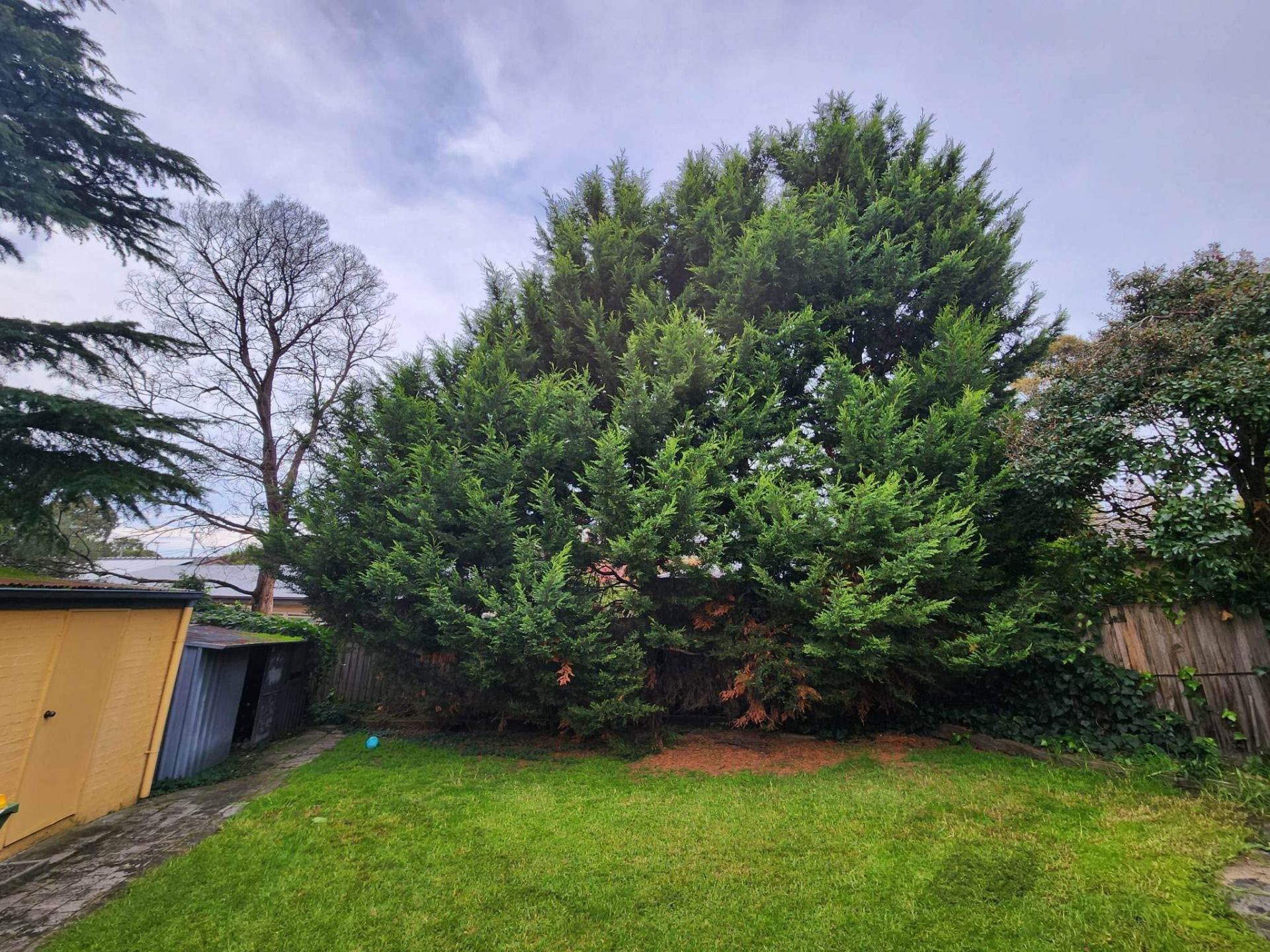
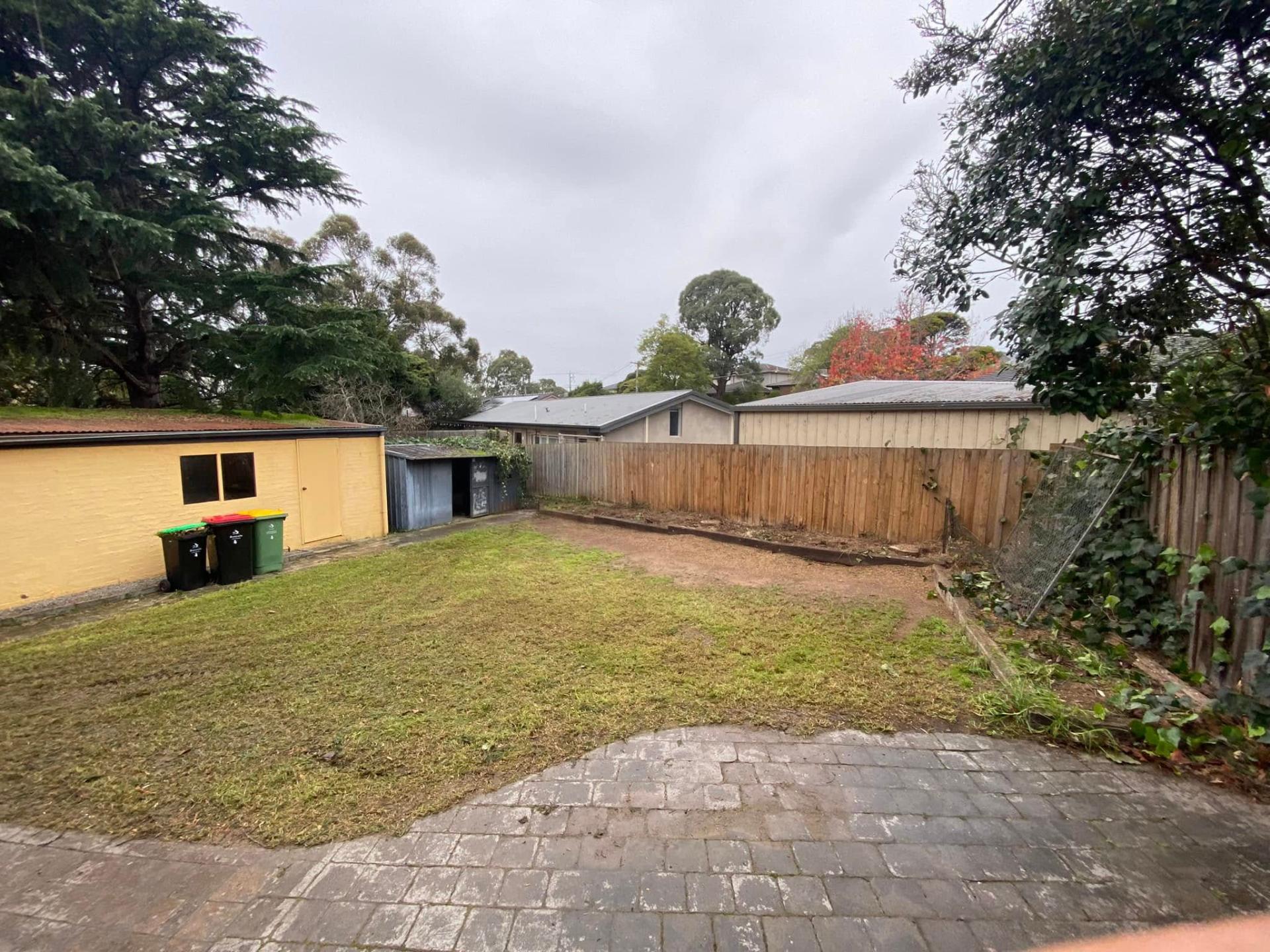
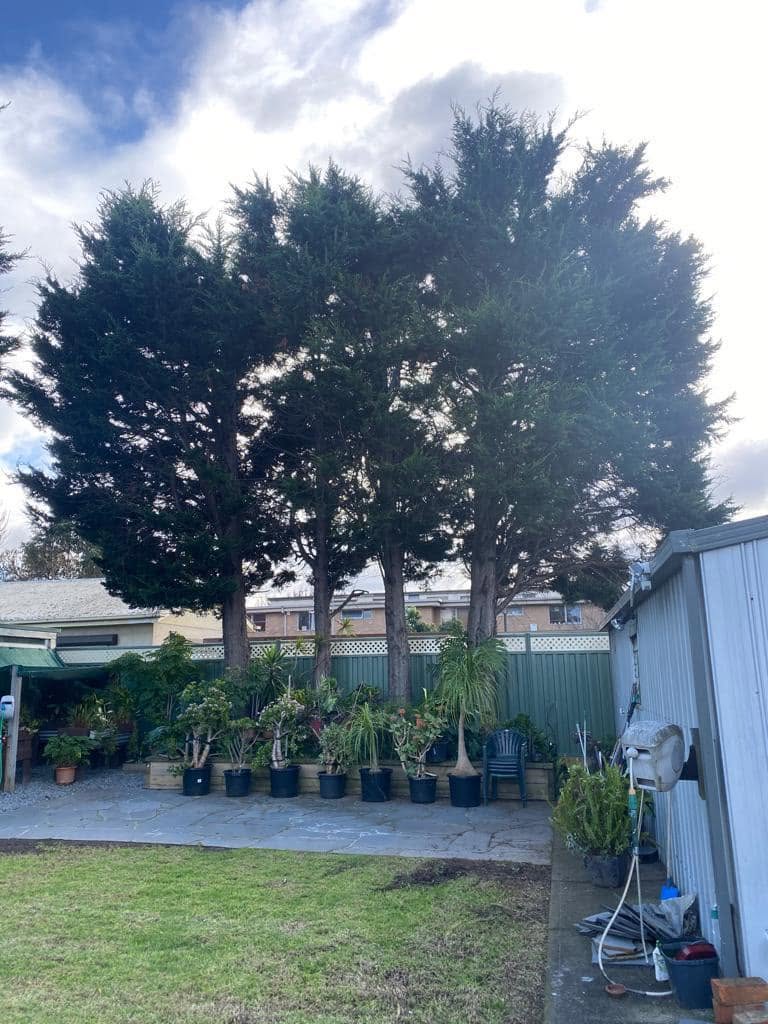
Recent DTS jobs — before & after
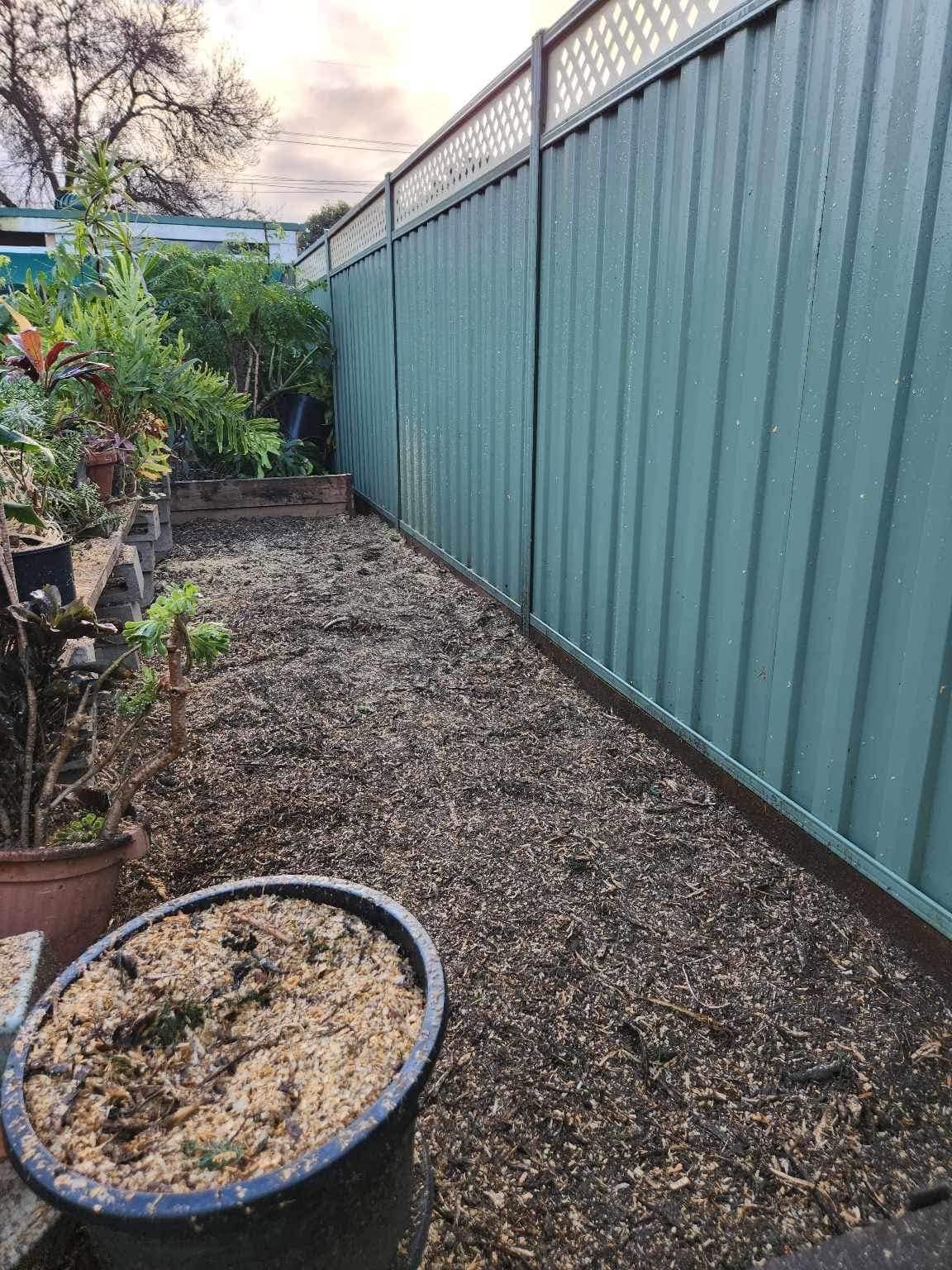
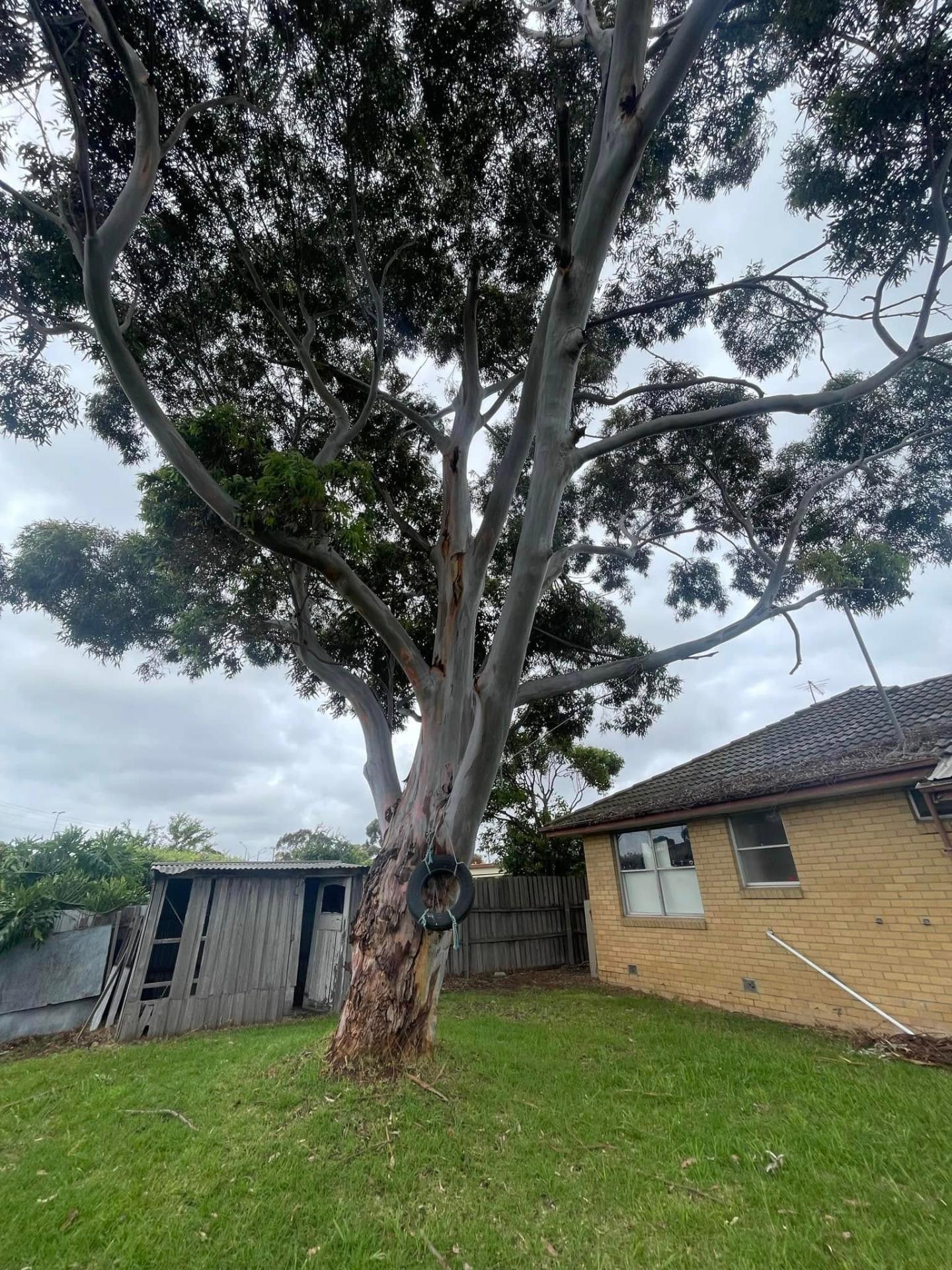
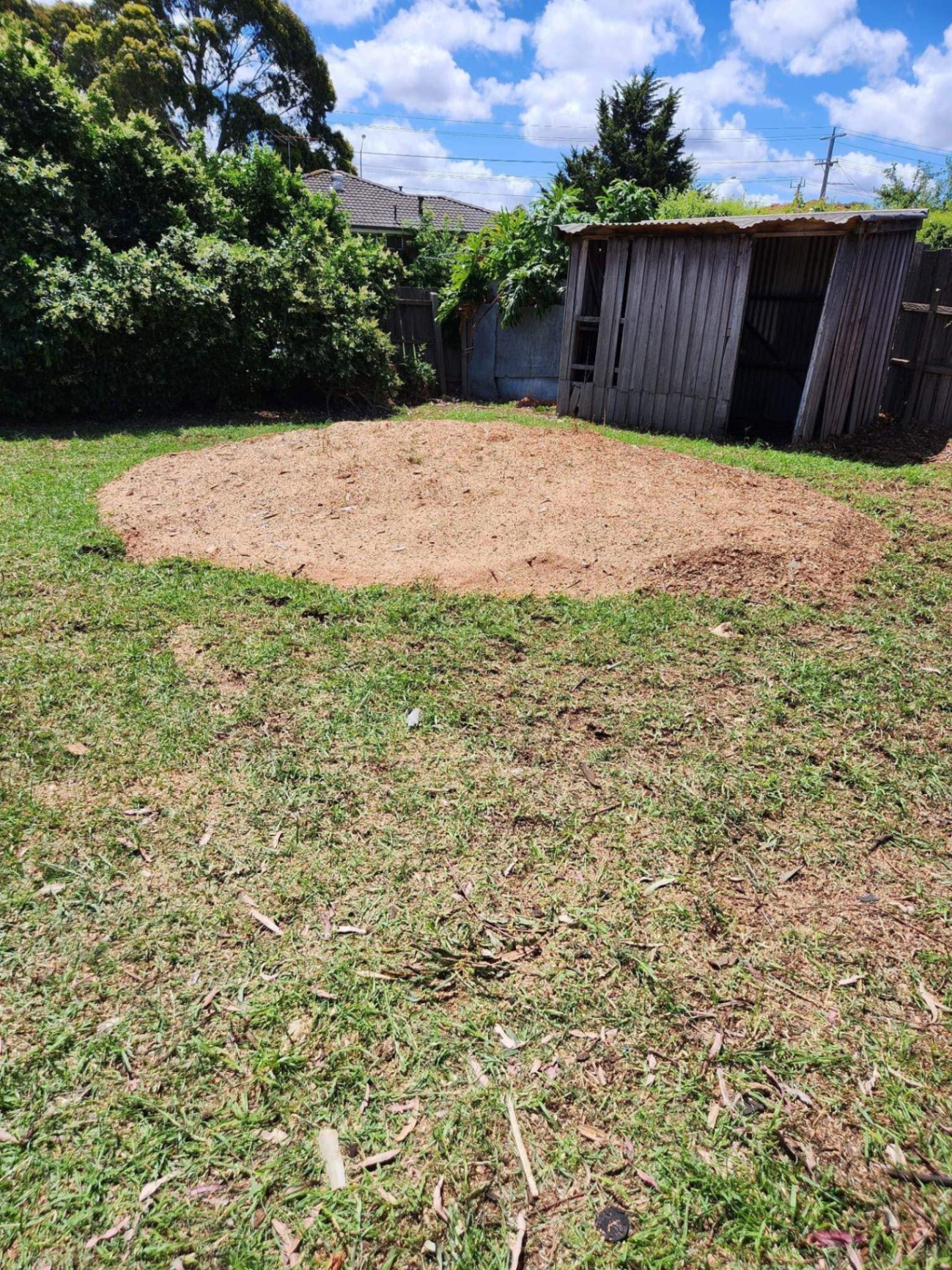
Real photos from removals, cypress rows and stump grinds our crews have completed across Melbourne — the same gear and process we bring to Point Cook.
Why Point Cook homeowners choose DTS
- ✓Fully insured — $20M public liability cover
- ✓Large tree specialists — gums, pines, cypress and palms
- ✓Tight-access removals with sectional rigging and narrow-access gear
- ✓Full clean-up, chipping and green-waste removal
- ✓Free on-site quotes — no obligation, usually same day
- ✓Local crew servicing Point Cook weekly
- ✓24/7 emergency call-outs for storm damage
Emergency tree removal in Point Cook — 24/7
Tree down across the driveway, a limb on the roof or a new lean after a windy night in Point Cook? We answer the phone around the clock and mobilise from our Kealba yard with cranes, EWPs, chippers and rigging — usually on site the same day, and within a few hours in normal conditions. Storm damage is commonly covered by home insurance, and we supply the photos, itemised quotes and arborist reports insurers ask for.
Tree removal prices in Point Cook
Indicative ranges for Point Cook jobs with reasonable access and full green-waste removal included. Difficult access, powerlines or crane work push a job toward the top of its range — we give you a fixed price on site.
| Job | Typical cost | Example |
|---|---|---|
| Small tree (up to 5m) | $450 – $900 | Ornamental pear, fruit tree, small wattle |
| Medium tree (5–10m) | $900 – $2,000 | Silver birch, melaleuca, established conifer |
| Large tree (10–20m) | $2,000 – $4,500 | Mature gum, cypress, liquidambar |
| Very large / crane work (20m+) | $4,500 – $10,000+ | Large eucalypt over a house or pool |
| Stump grinding | $100 – $600 | Priced by stump diameter, cheaper booked with the removal |
Point Cook tree removal FAQs
It depends on the planning overlays on your title and whether the tree is native or on the nature strip. Wyndham City Council controls removal through the planning scheme and its local law. We check the controls for your address free of charge when we quote.
Most Point Cook removals fall between $450 and $6,500. Small trees under 5m are typically $450–$900, medium trees $900–$2,000 and large trees over 10m $2,000–$4,500. Access, proximity to buildings and whether a crane is needed are the biggest price drivers.
We service Point Cook weekly and can usually quote within 24–48 hours. Storm damage and dangerous trees are prioritised, with 24/7 emergency call-outs available.
Yes. We grind stumps 200–300mm below grade — deeper if you're laying a slab or replanting — and remove or leave the mulch, whichever you prefer. Booking it with the removal is cheaper than a separate visit.
Yes — DTS carries $20 million public liability insurance on every job. Our current Certificate of Currency is available on request or from our insurance page.
Most standard estate garden trees don't need a permit. Vegetation near the Point Cook Coastal Park, Skeleton Creek or the grassland reserves is generally covered by a Wyndham Environmental Significance Overlay and needs council approval. We check your specific address before quoting.
Small estate trees typically run $350–$650. Larger screening trees, hedges or wind-damaged canopies usually run $700–$1,800, and anything requiring a Wyndham permit near a reserve will factor in the approval time. Quotes are fixed after an on-site look.
Yes. Point Cook's bay-side exposure means we get regular wind-damage call-outs there, and we run 24/7 emergency response with same-day attendance for anything hazardous.
Yes — we answer the phone 24 hours a day, 7 days a week, including weekends and public holidays. Call 0468 355 722 and you speak to an arborist who can triage the job immediately. Our crews and equipment are based at 16a Driscolls Rd, Kealba, so we can usually reach Point Cook the same day, and within a few hours in normal conditions.
Keep everyone clear of the tree and anything beneath it, move cars out from under damaged limbs, and never touch a tree in contact with power lines — call your electricity distributor's emergency line first. Photograph the damage from a safe distance for your insurer, then call us on 0468 355 722 for emergency make-safe works.
Tree care guides for Point Cook
- Do I need council permission to remove a tree in Melbourne? →
- How much does tree removal cost in Melbourne? →
- Storm-damaged trees: what every homeowner should do →
- 7 warning signs your tree could become dangerous →
Serving Point Cook from our Kealba base
Our yard and equipment are based at 16a Driscolls Rd, Kealba VIC 3021, so our crews reach Point Cook quickly — including same-day emergency call-outs after storms. Find us on Google Maps.